

One Country, Fifty Rulebooks
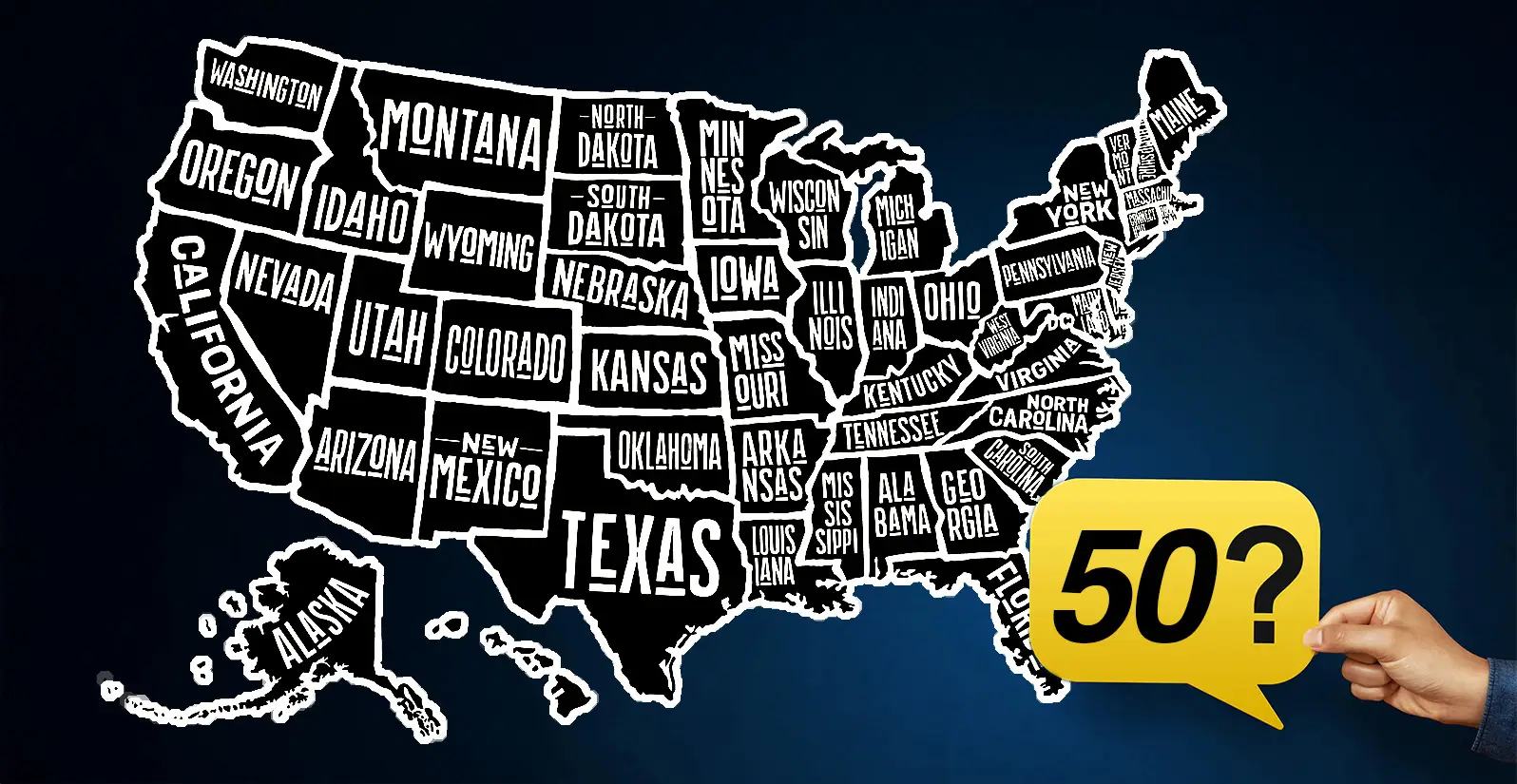
The Rise of State by State Employment Laws
For much of the last century, many employers could operate under the assumption that employment law was largely the same across the country. Yes, there were differences between states, but they were often viewed as exceptions rather than the rule. A company could create a handbook, establish payroll procedures, and build HR practices that worked reasonably well no matter where employees were located. That world is disappearing.
Today, employers are navigating an entirely different landscape. States are no longer waiting for federal guidance before acting. Instead, they are creating their own rules around paid leave, pay transparency, minimum wage, artificial intelligence in hiring, employee classification, noncompete agreements, workplace privacy, discrimination protections, payroll timing, and dozens of other employment issues. In some cases, cities and counties are adding another layer of requirements on top of state law. The result is something that many business owners never expected.
Running a business in five states can sometimes feel like running five different businesses. This shift did not happen overnight. It has been building for years, but the pace has accelerated dramatically. Lawmakers have become more willing to address workplace issues at the state level, often responding to local economic conditions or political priorities. While that approach gives states greater flexibility, it also means employers are managing a growing patchwork of regulations that rarely fit neatly together.
Consider a company headquartered in Arizona with employees in California, Colorado, Texas, Illinois, and New York. On paper, it is one organization. In practice, it may have different leave requirements, different payroll obligations, different hiring disclosures, different posting requirements, and different employee notices depending on where each person works.
That complexity has changed the role of HR. It is no longer enough to know employment law. Increasingly, HR professionals need to know which employment law applies to which employee, and under what circumstances. The answer may depend on where someone lives, where they work, where they report, or even where they performed the work on a particular day.
This creates challenges that are easy to underestimate. A manager transfers an employee to another state and assumes the same handbook still applies. A remote employee moves without telling the company. A payroll system continues using the wrong local tax rules. A recruiting team posts the same job advertisement nationwide without realizing one state requires salary ranges while another has different disclosure requirements.
None of these situations happen because employers are careless. They happen because complexity has quietly outpaced the systems many organizations built years ago.
One of the more interesting consequences of this shift is that compliance is becoming less about knowing every law and more about building systems that can adapt as laws change. Businesses that rely on memory or spreadsheets often struggle because every new regulation requires another manual adjustment. Organizations with structured HR and payroll processes tend to adapt much more easily because their systems are designed to evolve instead of remaining static.
This is one reason more companies are rethinking how they manage HR, payroll, and benefits. Many owners originally outsourced these functions because they wanted to reduce administrative work or improve efficiency. Today, another reason has become equally important.
They want confidence.
Confidence that payroll is following the right state requirements. Confidence that employee policies are being updated as laws evolve. Confidence that onboarding, leave administration, and benefits are aligned with the jurisdictions where employees actually work. Confidence that someone is paying attention to changes before they become expensive problems.
Outsourcing does not eliminate every compliance challenge. Employment law will likely continue becoming more complex for years to come. What it does provide is a team whose job is to monitor those changes, adjust processes when needed, and help business owners avoid spending their evenings trying to interpret legislation that may change again next quarter.
There is a broader lesson here that extends beyond compliance. The businesses that thrive over the next decade will not necessarily be the ones that can predict every new regulation. They will be the ones that build organizations capable of adapting without constant disruption. Flexibility is becoming just as valuable as efficiency. Systems that worked when every employee sat in one office may not work for a workforce spread across multiple states and time zones.
The map of employment law is no longer uniform, and there is little reason to believe it will become simpler anytime soon.
For business owners, that means the question is no longer, “Are we compliant?”
The better question is, “Are we built to stay compliant as the rules continue to change?”
The companies that can answer yes are not simply protecting themselves from risk. They are building a foundation that allows them to grow with confidence, no matter which state their next employee calls home.